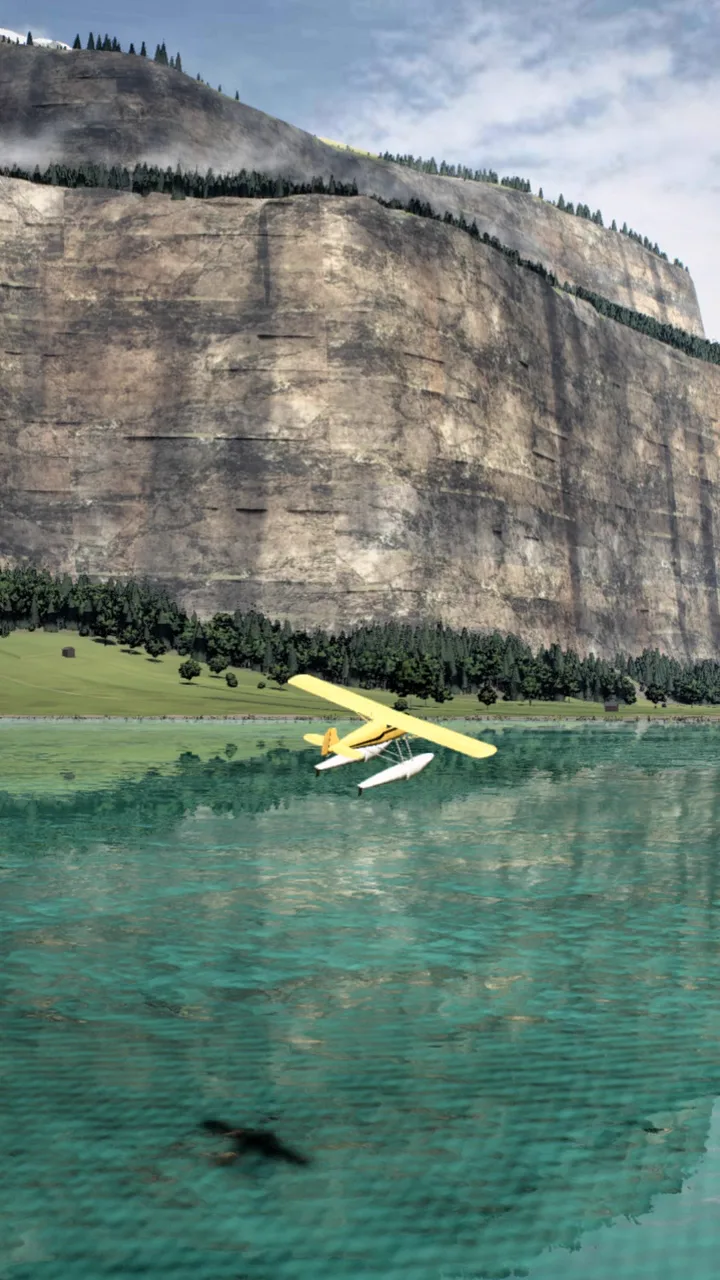
Planes, a field, and the whole sky.
Openflight is an RC plane simulator that runs in your browser. Take off from a grass strip or the lake, fly the valley, land on the water.
Fig. 1 Light taildragger on floats, 1.5 kg, climbing off the lake at 18 to 21 m/s. Flown and rendered in real time in the simulator.
One flight, from the water and back.
A floatplane on the lake, flown by holding the sticks the way your radio does. Every frame below is from that one flight, and every number beside it was logged as it flew.
-
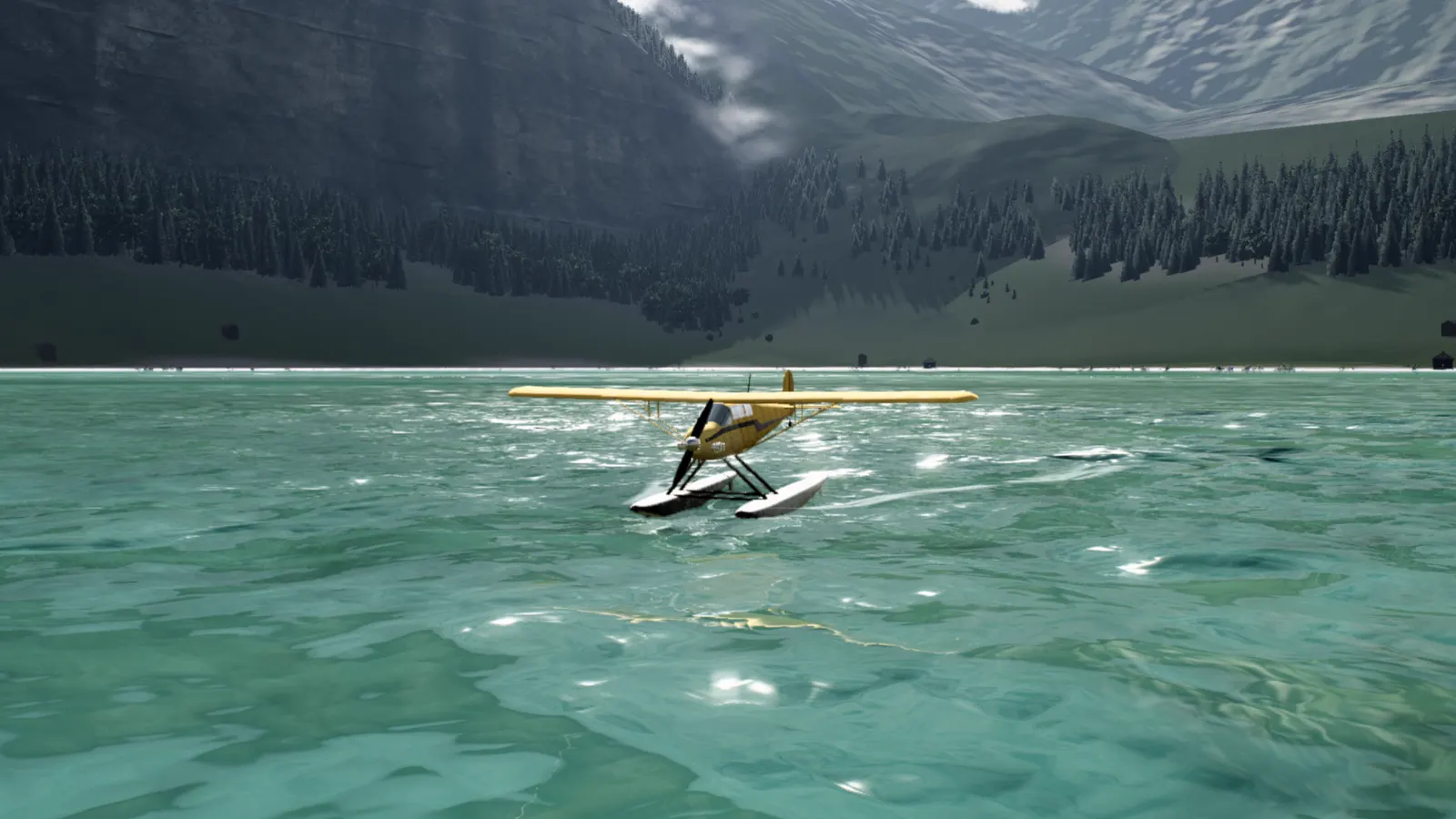
Fig. 2Taxi on the lake at 0:04. Taxi
A little throttle and the floats push through the water at walking pace, the cliffs on the far shore.
- Time
- 0:04
- Speed
- 1.3 m/s
- Height
- on the water
-
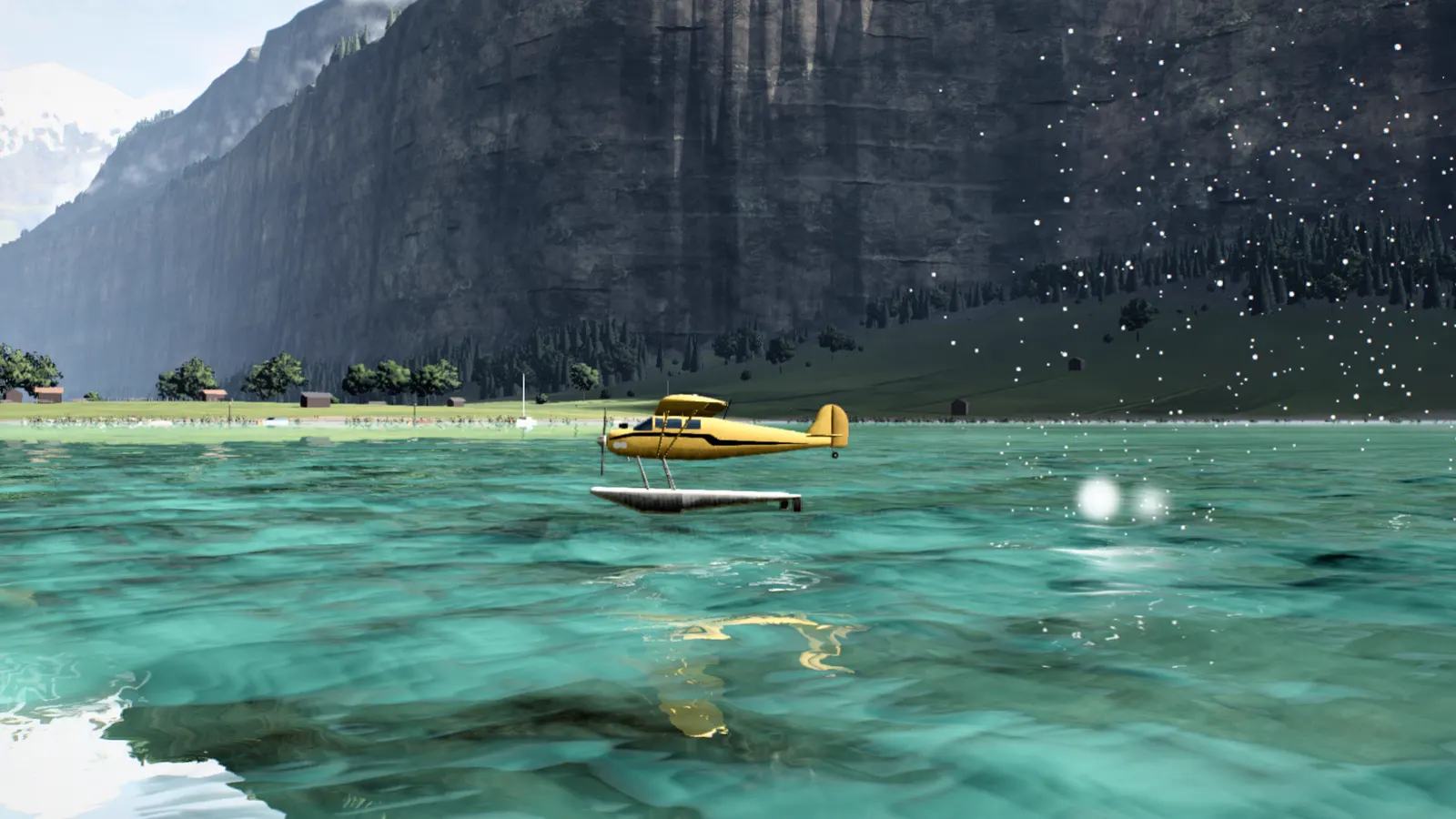
Fig. 3On the step at 0:07. Step
Full throttle. The floats climb onto the step, the spray comes off them and the drag falls away.
- Time
- 0:07
- Speed
- 12.0 m/s
- Height
- 0.1 m
-
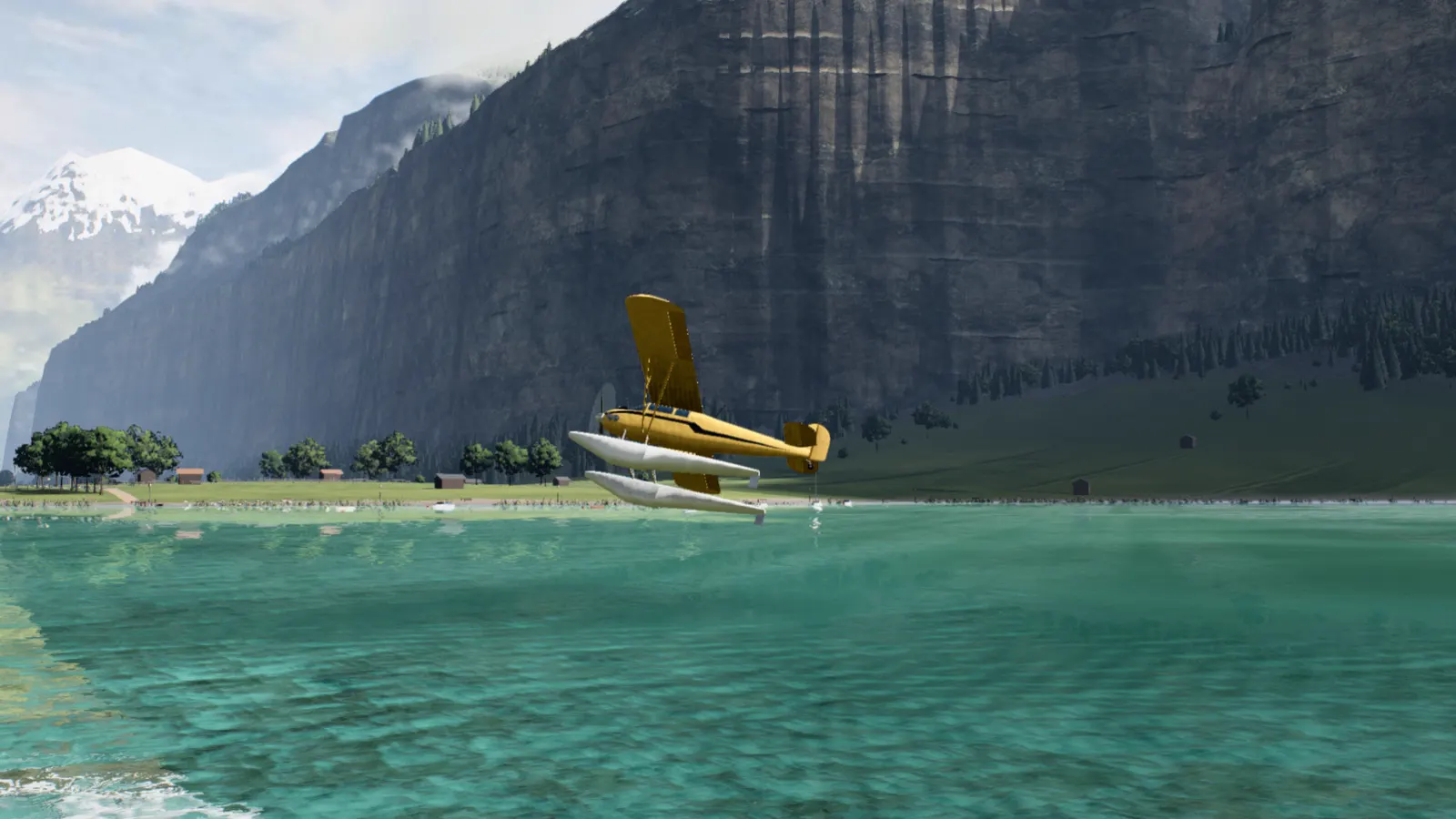
Fig. 4Lift off at 0:08. Lift
The wing takes the weight. The floats leave the water a few metres after the step, nose up.
- Time
- 0:08
- Speed
- 16.8 m/s
- Height
- 2.2 m
- Nose
- 11.5° up
-
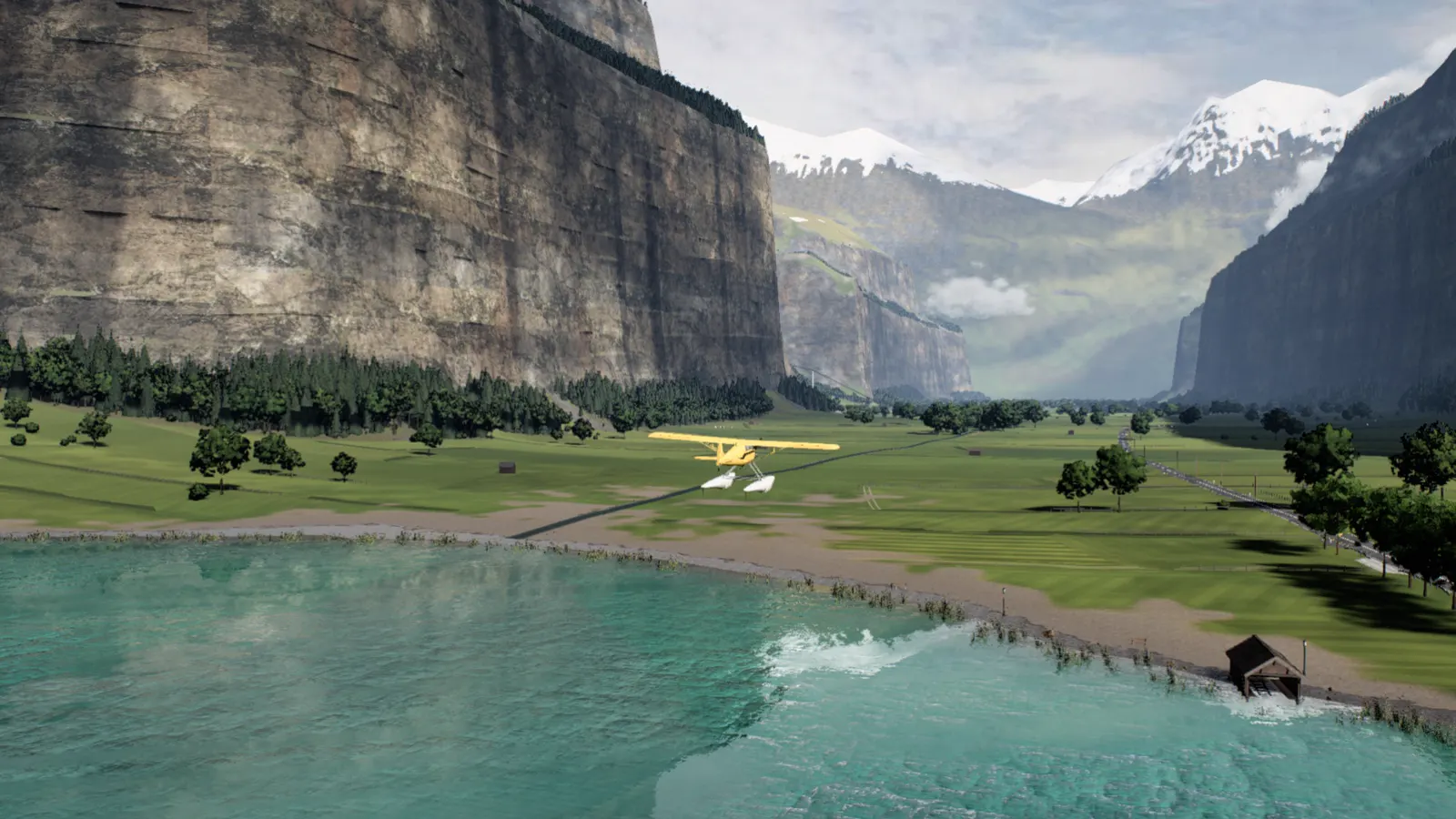
Fig. 5Climbing up the valley at 0:16. Valley
Climbing out over the shore and up the valley, the snow at its head and the cliffs on both sides.
- Time
- 0:16
- Speed
- 19.8 m/s
- Height
- 30 m
-
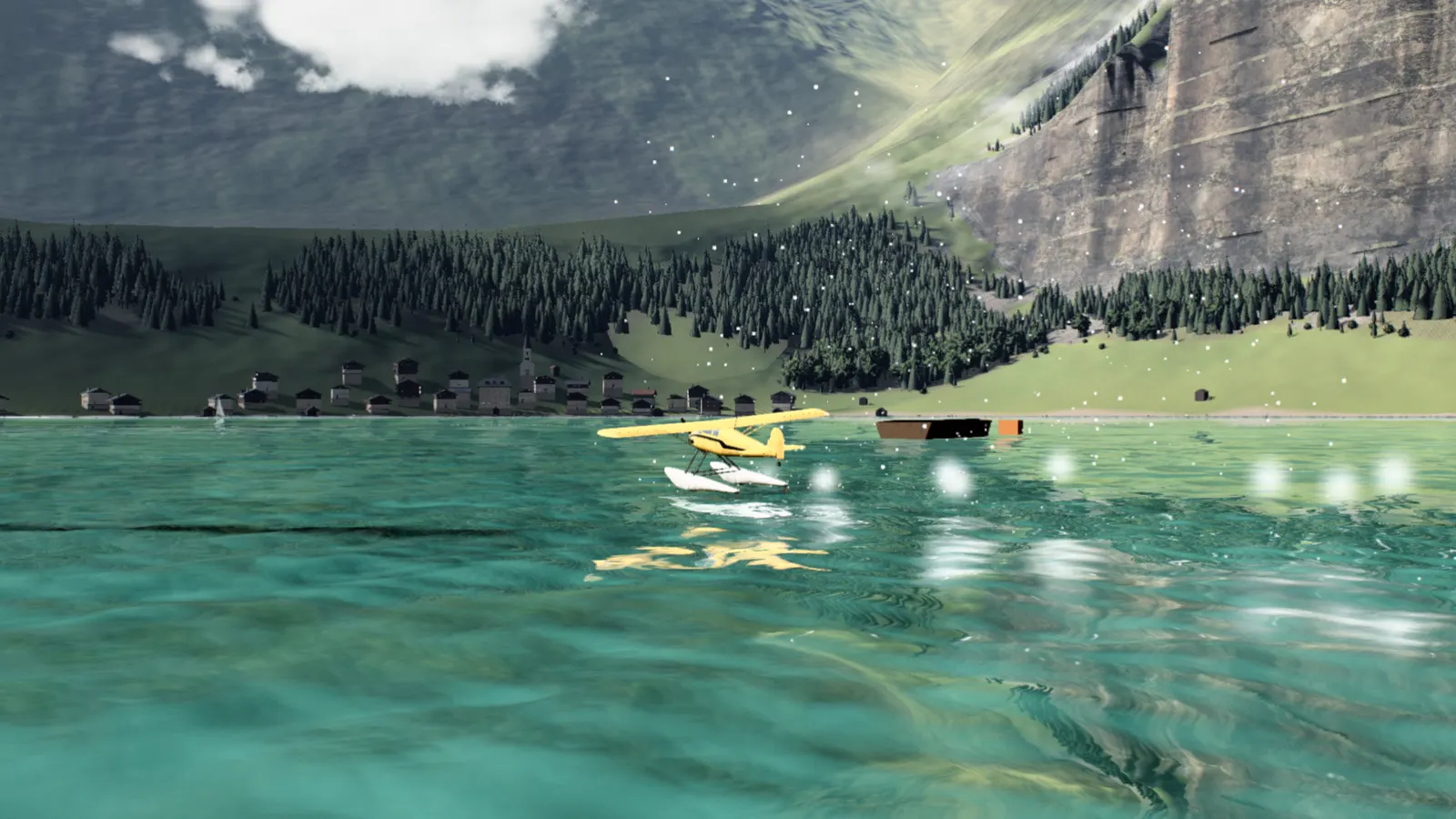
Fig. 6Touchdown at 1:37. Land
A long circuit later, throttle closed and the nose up for the flare. The floats touch and the lake slows it down.
- Time
- 1:37
- Speed
- 8.1 m/s
- Height
- touching
- Nose
- 8.6° up
The hangar.
Twenty aircraft, planes only. Each one flies on its own model, built from its real span, weight, wing area and power, so a trainer forgives you and a warbird doesn't.
| Picture | Aircraft | Span | Mass | Wing | Loading | Stall | Top |
|---|---|---|---|---|---|---|---|
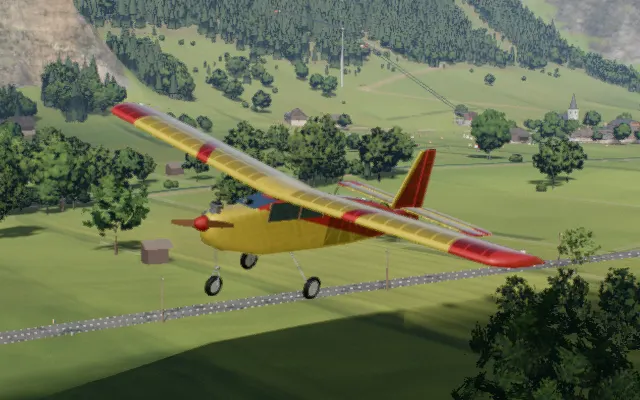 | High wing trainerFour stroke glow, 3 channels | 1,981 mm | 2,722 g | 74.2 dm² | 37 g/dm² | 7.2 m/s | 23.1 m/s |
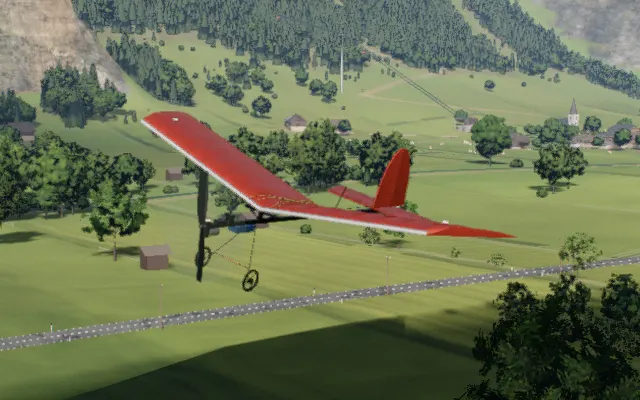 | Park flyer2S electric, 3 channels | 1,176 mm | 420 g | 32.6 dm² | 13 g/dm² | 4.4 m/s | 10.3 m/s |
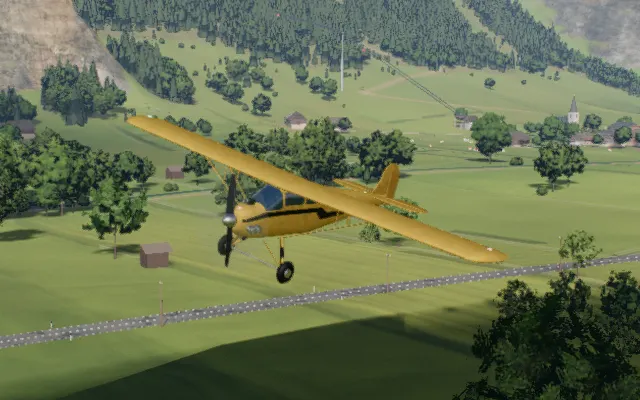 | Light taildragger3S electric | 1,400 mm | 1,320 g | 28.0 dm² | 47 g/dm² | 8.1 m/s | 22.4 m/s |
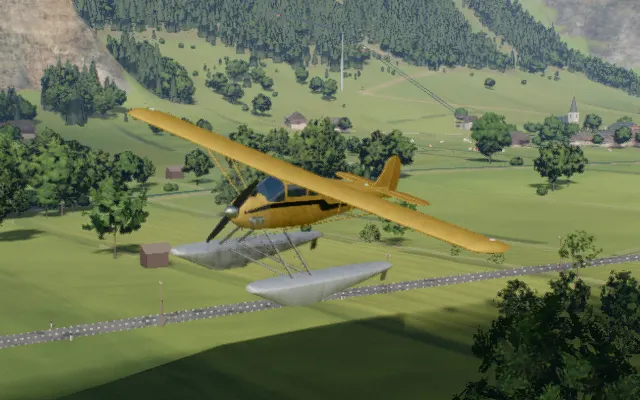 | Light taildragger on floats3S electric | 1,400 mm | 1,532 g | 28.0 dm² | 55 g/dm² | 8.7 m/s | 20.2 m/s |
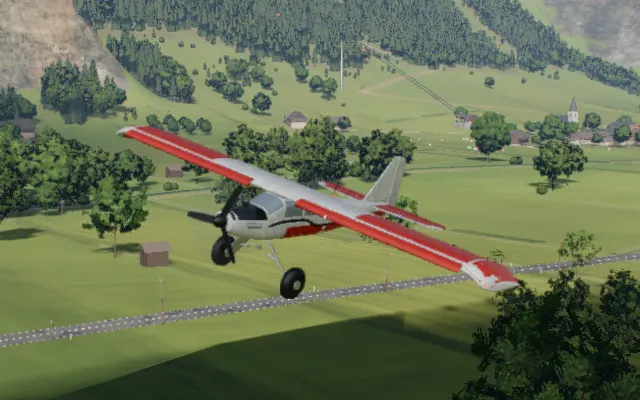 | STOL bush plane4S electric, slats and flaps | 1,555 mm | 1,700 g | 36.1 dm² | 47 g/dm² | 7.2 m/s | 27.2 m/s |
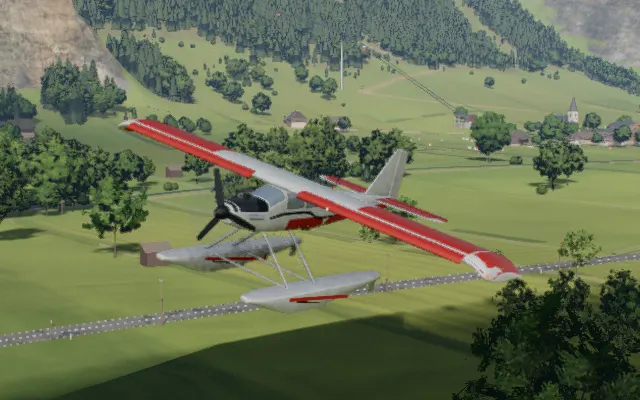 | STOL bush plane on floats4S electric | 1,555 mm | 1,934 g | 36.1 dm² | 54 g/dm² | 7.7 m/s | 25.3 m/s |
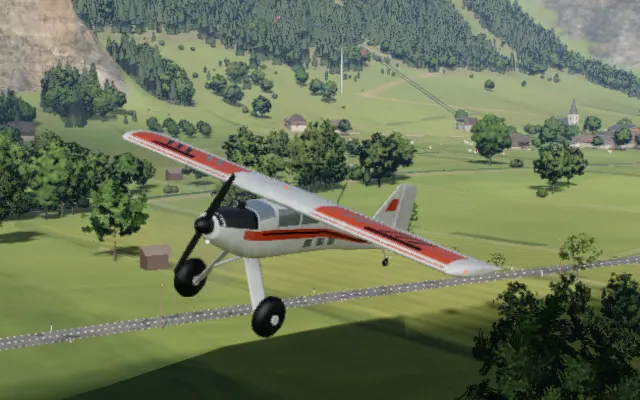 | Night STOL aerobat4S electric, lit inside | 1,200 mm | 1,698 g | 28.7 dm² | 59 g/dm² | 9.1 m/s | 23.6 m/s |
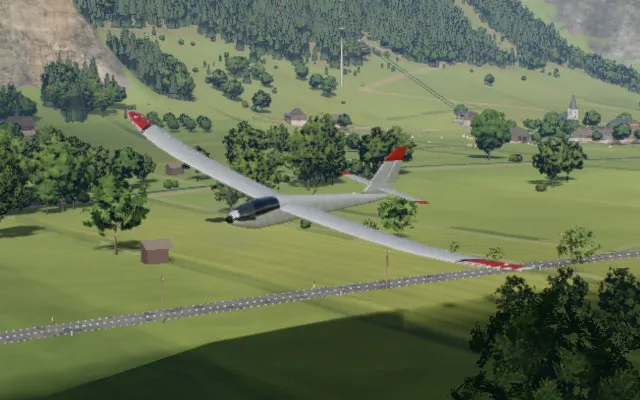 | Motor glider3S electric, folding prop | 2,000 mm | 980 g | 35.5 dm² | 28 g/dm² | 6.5 m/s | 26.5 m/s |
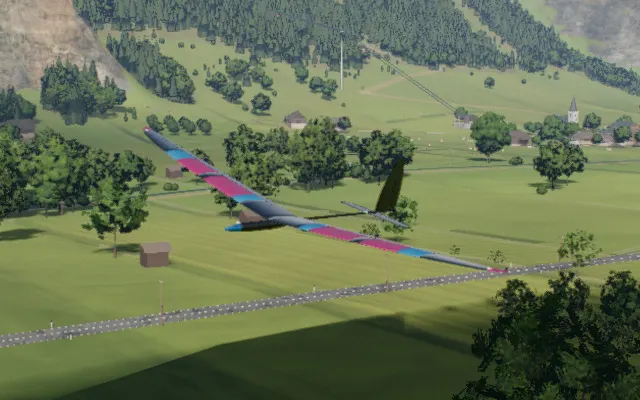 | Discus launch gliderNo motor | 1,490 mm | 213 g | 19.0 dm² | 11 g/dm² | 4.4 m/s | 41.0 m/s |
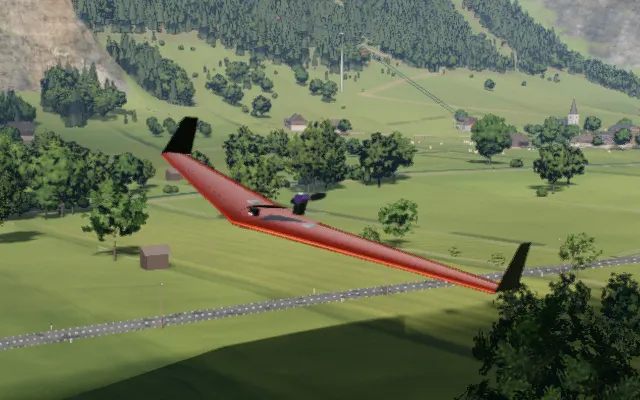 | Flying wing3S electric | 1,219 mm | 723 g | 26.0 dm² | 28 g/dm² | 7.4 m/s | 36.8 m/s |
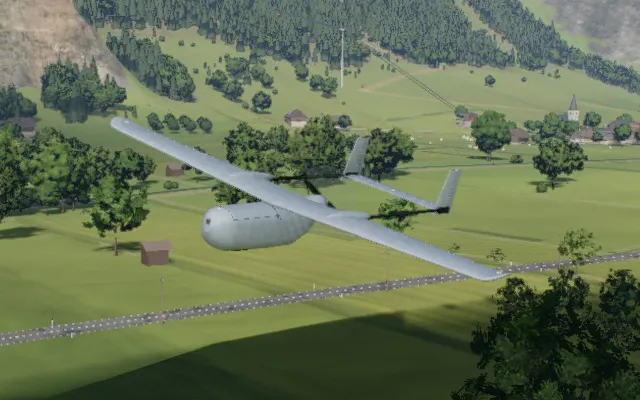 | Twin boom cruiser4S electric, pusher | 1,800 mm | 2,100 g | 36.0 dm² | 58 g/dm² | 9.2 m/s | 29.3 m/s |
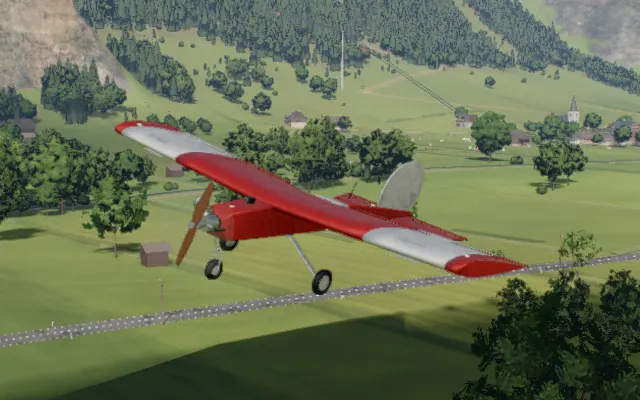 | Sport planeTwo stroke glow, 4 channels | 1,567 mm | 2,722 g | 51.1 dm² | 53 g/dm² | 9.5 m/s | 28.3 m/s |
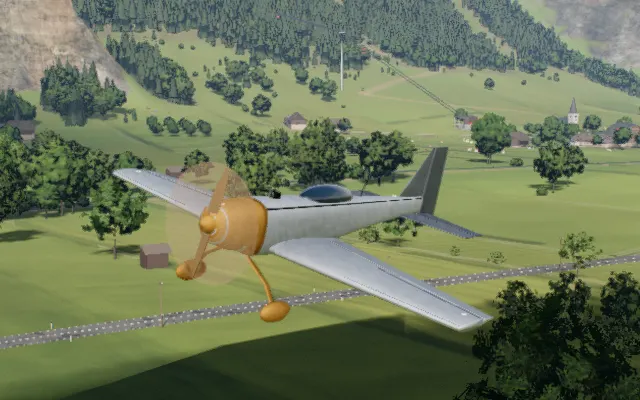 | 3D aerobat4S electric | 1,308 mm | 1,510 g | 36.9 dm² | 41 g/dm² | 8.3 m/s | 30.3 m/s |
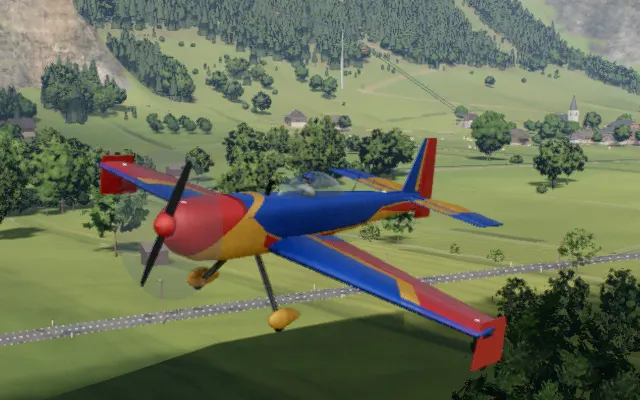 | Precision aerobat6S electric | 1,702 mm | 3,629 g | 55.5 dm² | 65 g/dm² | 10.6 m/s | 33.1 m/s |
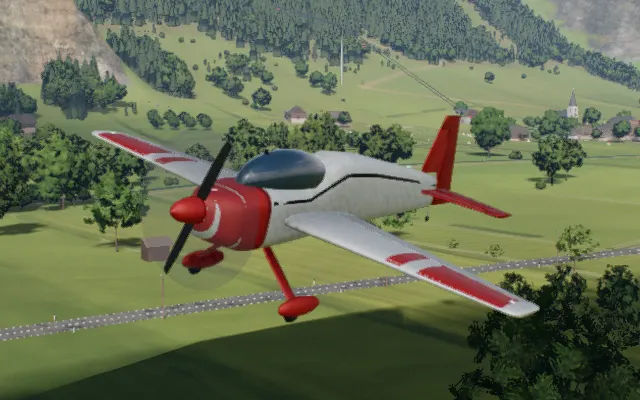 | Giant scale aerobat120 cc petrol twin | 2,680 mm | 12,474 g | 115.0 dm² | 108 g/dm² | 13.9 m/s | 42.5 m/s |
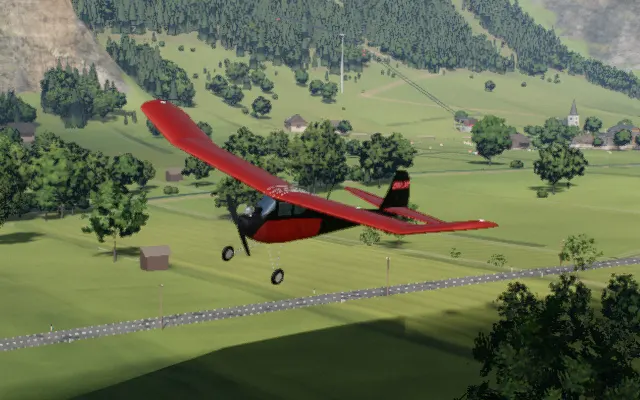 | Vintage free flight modelGlow .049, 3 channels | 1,118 mm | 560 g | 21.3 dm² | 26 g/dm² | 6.5 m/s | 12.5 m/s |
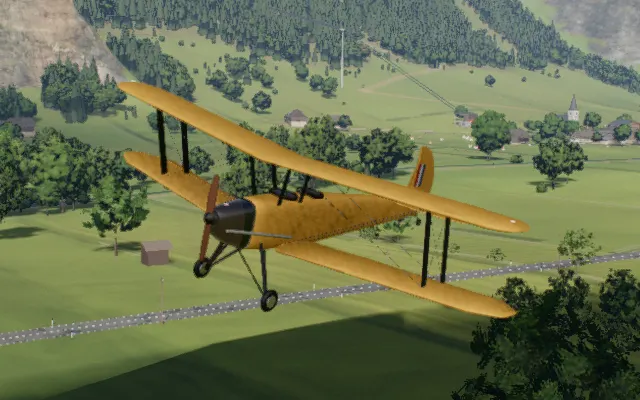 | Vintage biplaneTwo stroke glow | 1,803 mm | 4,649 g | 87.7 dm² | 53 g/dm² | 9.5 m/s | 23.2 m/s |
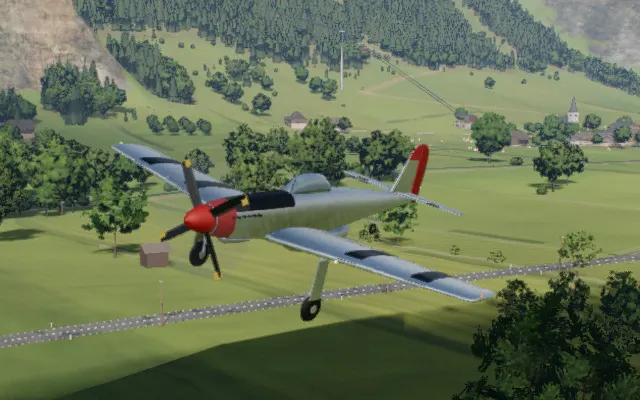 | Warbird4S electric, retracts and flaps | 1,450 mm | 2,350 g | 35.4 dm² | 66 g/dm² | 10.1 m/s | 26.6 m/s |
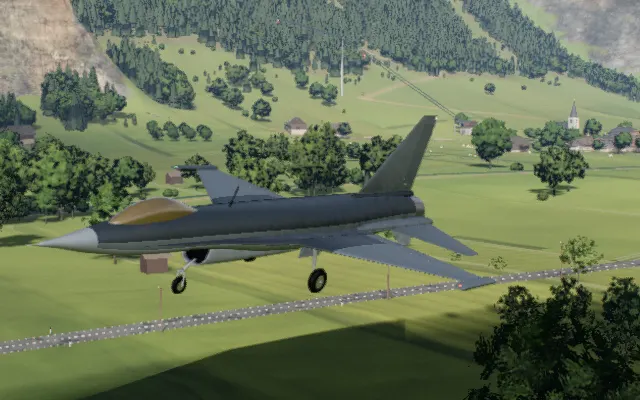 | Sport jet70 mm ducted fan, 6S | 878 mm | 2,116 g | 21.5 dm² | 98 g/dm² | 12.0 m/s | 45.8 m/s |
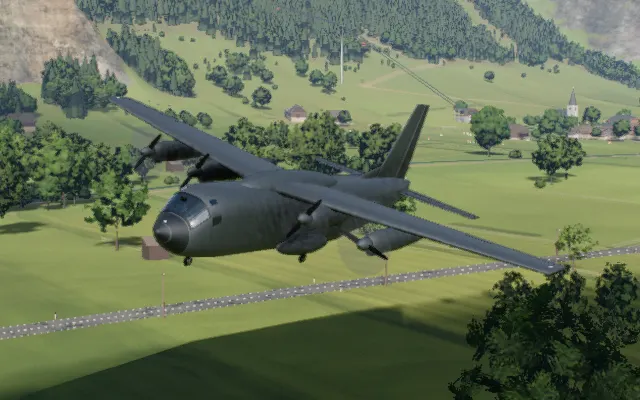 | Four motor transport6S electric, four motors | 3,077 mm | 6,728 g | 104.9 dm² | 64 g/dm² | 9.7 m/s | 28.6 m/s |
The stall, computed.
Every curve here comes from the flight model's own tables, the numbers each aircraft flies on. Pick an aircraft and see the angle where its wing stalls, and how far it glides.
The four aircraft, from the same tables: the critical angle from the wing alone, best glide from the whole aircraft. Sea level, no prop wash.
| Aircraft | Critical angle | Stall speed | Best glide | Wing loading |
|---|---|---|---|---|
| Trainer | 13.0° | 7.2 m/s | 8.6 to 1 | 37 g/dm² |
| Motor glider | 8.3° | 6.5 m/s | 18.9 to 1 | 28 g/dm² |
| 3D aerobat | 14.5° | 8.3 m/s | 7.8 to 1 | 41 g/dm² |
| Warbird | 14.3° | 10.1 m/s | 9.9 to 1 | 66 g/dm² |
Learn to fly.
Three guides to the three things every new RC pilot has to get right, written from the same flight model.
- Your first flightGround checks, the sticks in Mode 1 and Mode 2, takeoff into the wind, the first circuit, trim and coming home.
- Stalls and spinsAngle of attack, the low slow turn onto final, tip stalls, spins, and the recovery steps in order.
- LandingThe circuit, a steady approach, the flare and touchdown, crosswinds and go arounds.