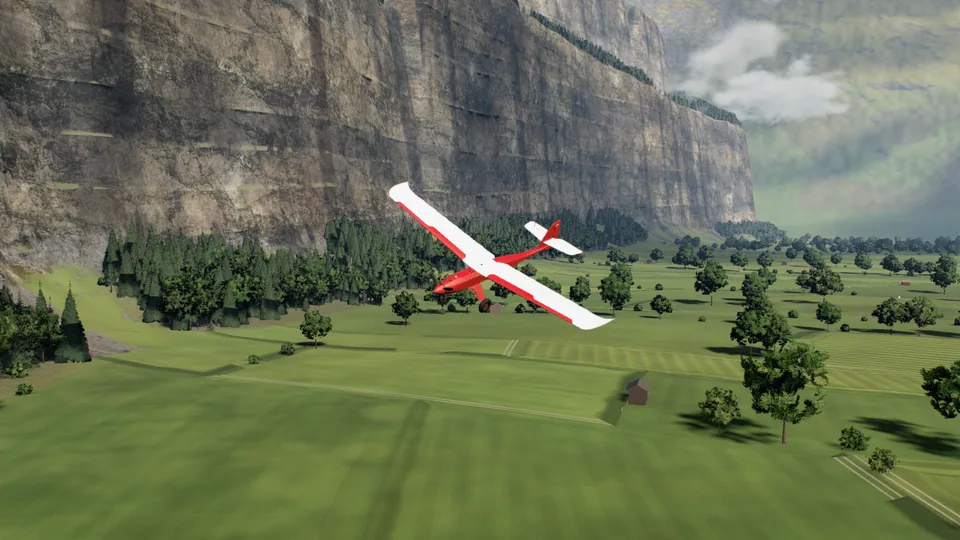
Thermals that follow the sun, and birds that find them
Rising air is what keeps a glider up and what a soaring bird lives on. Since 1 November the thermals in OpenFlight follow the sun, cumulus mark them, and birds use them the way real ones do.
Thermals follow the sun
Thermals come with the breeze and gusty weathers; calm air and a front bring none. How strong they are is set by the sun on the game's clock. A morning thermal is weaker and tops out lower, the strongest come round noon, and at golden hour and at night there are none.
Since 7 November each site's thermals also stop at that place's own ceiling, the height where the rising air condenses into cloud or meets the stable air above, whichever comes first. We worked it out from ten years of weather records for a real place like each site, hour by hour, so it rises through the day. At the mesas the air is so dry that the thermals never reach their cloud base: they are blue, with no cumulus to mark them.
Cumulus over the thermals
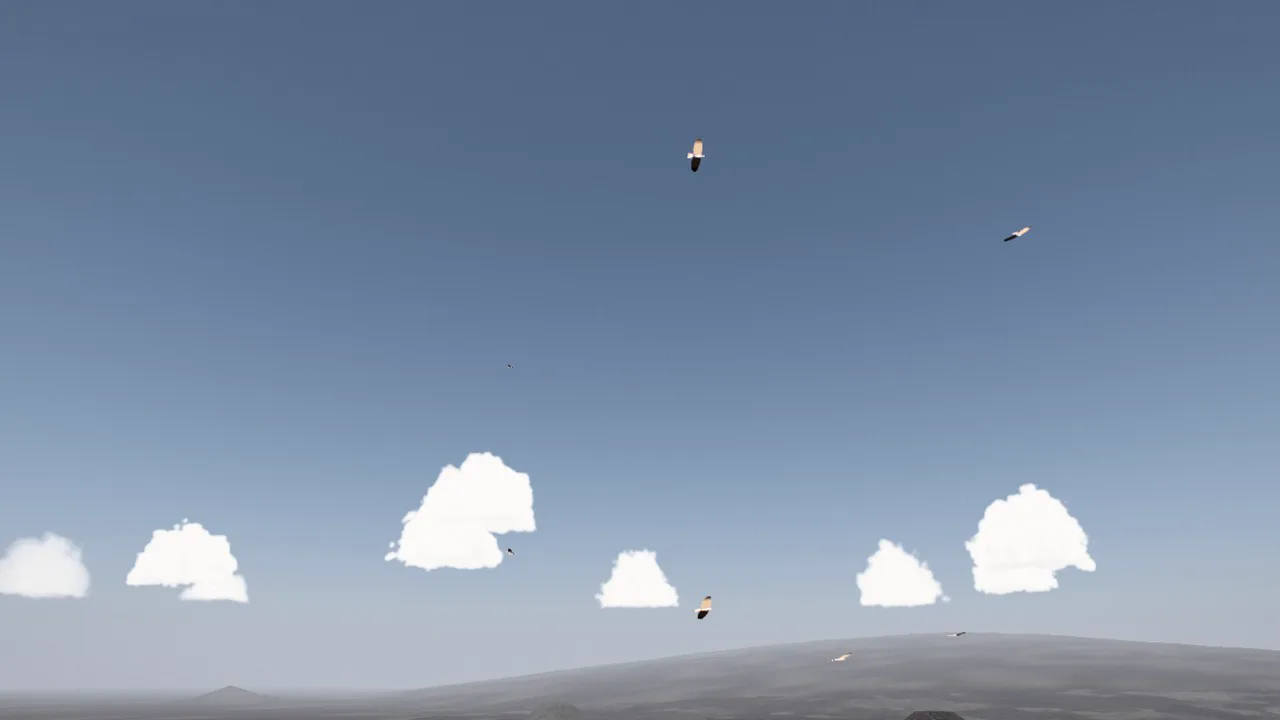
A thermal that reaches its cloud base builds a cumulus over it. The cloud grows after the thermal has been rising for a while and thins after the thermal dies. They are drawn as lit volumes, and a hill can stand in front of them. There are none at night, at golden hour, in calm air or under a front.
Birds that read the air
The birds fly the same air as your plane. A soaring bird circles where the air rises faster than it sinks: a hawk or buzzard sinks about 0.9 m/s while it circles, a vulture about 0.75. When a bird has been sinking for 9 seconds it gives up and leaves to look elsewhere. On a face with the wind onto it, at the sea cliffs and the mesas, gulls and vultures beat back and forth in the ridge lift instead of circling.
So a kettle of circling birds is a thermal you can see. Fly over to them and you will find the lift. Get within 40 m and they break away, and the alarm spreads to the rest of the group.
Each site has its own birds: buzzards and crows in the Swiss Valley, gulls and jackdaws on the sea cliffs, vultures and swifts at the mesas. In calm air the soaring birds stay away, but for the odd one crossing low.
The same birds for everyone
In a room the room's server flies one flock for everybody. Everyone sees the same birds in the same thermals, and a pilot who scatters a kettle scatters it for everyone.